Ever looked at a traditional wind turbine and wondered if there was a different way? A way that’s maybe more adaptable, more aesthetically pleasing, or just plain better suited to certain environments? Well, you’re not alone. The world of wind energy is constantly evolving, and one exciting development is the rise of the vertical wind generator.
Understanding Vertical Axis Wind Turbines
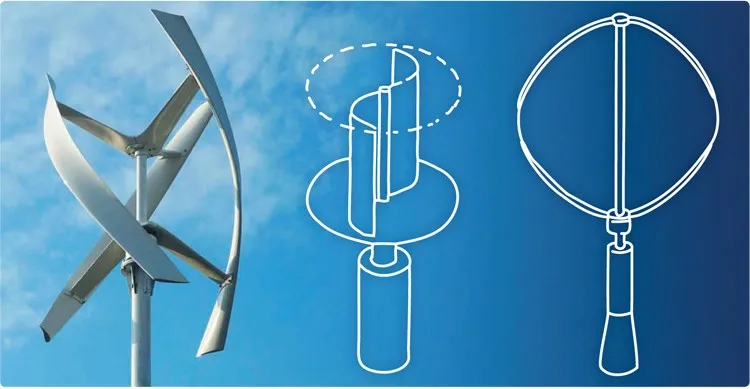
So, what is a vertical wind generator, and why is it making waves? Unlike the horizontal axis wind turbines (HAWTs) we typically associate with wind farms, a vertical wind generator, also known as a Vertical Axis Wind Turbine (VAWT), has its rotor shaft arranged vertically. This seemingly simple change in orientation unlocks a whole host of potential advantages.
Imagine a turbine that doesn’t need to be pointed into the wind. That’s the beauty of a VAWT. Because of their design, they can accept wind from any direction, eliminating the need for complex yaw mechanisms that HAWTs rely on to constantly adjust their position. This simplifies the design, reduces maintenance needs, and makes them suitable for turbulent wind conditions where the wind direction shifts frequently.
There are two main types of VAWTs – the Darrieus and the Savonius. The Darrieus turbine, often resembling an eggbeater, is known for its higher efficiency but requires an external power source to start. The Savonius turbine, on the other hand, uses a drag-based design, making it self-starting but generally less efficient. Hybrid designs exist that attempt to combine the best features of both.
Advantages of Vertical Wind Generators
Let’s dive deeper into the benefits of employing vertical wind generators.
- Omnidirectional Wind Capture – As mentioned, their ability to harness wind from any direction is a game-changer. This is particularly useful in urban environments or areas with complex terrain where wind patterns can be unpredictable.
- Lower Noise Levels – VAWTs tend to operate more quietly than HAWTs. This is a significant advantage for residential areas or locations where noise pollution is a concern.
- Reduced Visual Impact – Some find the sleek, modern designs of VAWTs more visually appealing than the large, three-bladed HAWTs. Their smaller size and ground-level installation can also minimize their impact on the landscape.
- Easier Maintenance – The generator and gearbox of a VAWT can be located at ground level, making maintenance and repairs much easier and safer to perform. No more climbing tall towers!
- Suitable for Urban Environments – Their compact size and ability to capture turbulent wind make them ideal for integration into urban landscapes, such as rooftops or building facades. Think of a future where city buildings generate their own clean energy.
Applications of Vertical Wind Generators
Where can you find these innovative turbines in action? The applications are surprisingly diverse.
- Residential Power – Small-scale VAWTs are increasingly popular for providing renewable energy to individual homes. They can supplement grid power or even operate off-grid in remote locations.
- Commercial Buildings – Businesses are also adopting VAWTs to reduce their carbon footprint and lower energy costs. Imagine a shopping mall powered by the wind blowing across its rooftop.
- Street Lighting – Some municipalities are using VAWTs to power streetlights, creating a self-sufficient and environmentally friendly lighting system.
- Telecommunications Towers – VAWTs can provide a reliable power source for remote telecommunications towers, reducing the need for diesel generators and their associated emissions.
- Hybrid Systems – VAWTs are often integrated into hybrid renewable energy systems, combining wind power with solar power and energy storage to create a more resilient and reliable energy supply.
Factors to Consider
Before you rush out and buy a vertical wind generator, there are a few things to keep in mind.
- Efficiency – While VAWT technology is improving, traditional HAWTs still generally have higher efficiency ratings. This means they can generate more electricity from the same amount of wind.
- Cost – The initial cost of a VAWT system can be higher than that of a comparable HAWT system, although this difference is decreasing as VAWT technology matures.
- Space Requirements – Although VAWTs can be more compact than HAWTs, they still require a certain amount of open space to operate effectively.
- Wind Resource Assessment – It’s essential to assess the wind resource at your location to determine if a VAWT is a viable option. Factors such as average wind speed, turbulence, and prevailing wind direction should be considered.
The Future of Vertical Wind Generators
The future looks bright for vertical wind generators. Ongoing research and development efforts are focused on improving their efficiency, reducing their cost, and expanding their range of applications. Advances in materials science, aerodynamics, and control systems are paving the way for a new generation of high-performance VAWTs that can compete with traditional HAWTs in a wider range of environments.
As the world transitions towards a more sustainable energy future, vertical wind generators are poised to play a significant role. Their unique advantages, combined with ongoing innovation, make them a compelling option for homes, businesses, and communities looking to harness the power of the wind in a cleaner, quieter, and more visually appealing way. The design of a vertical wind generator is pushing the limits of how we capture wind energy. The coming years will bring even more advancements.