Wind turbines, those iconic symbols of green energy, come in various shapes and sizes. While horizontal-axis wind turbines (HAWTs) dominate the landscape, their vertical counterparts, known as vertical-axis wind turbines (VAWTs), offer a unique approach to harnessing wind power. But just how do vertical wind turbines work, and what makes them different? Let’s delve into the mechanics and uncover the secrets behind their operation.
VAWT Designs — A Matter of Style
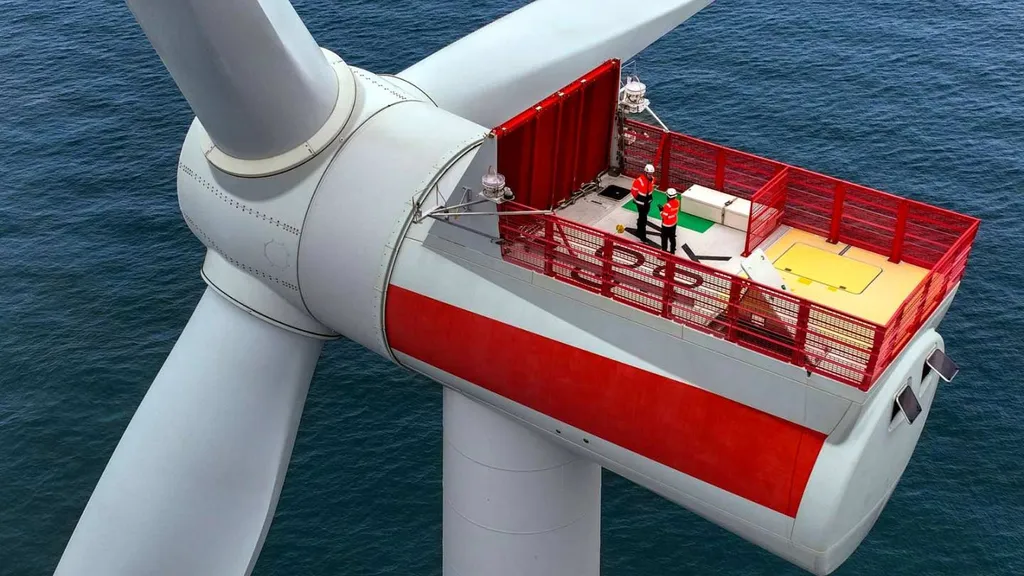
Unlike HAWTs, which resemble airplane propellers and must face the wind, VAWTs rotate around a vertical axis. This key distinction provides several advantages. They accept wind from any direction, eliminating the need for complex yaw mechanisms that constantly adjust the turbine’s orientation. Furthermore, the generator and gearbox can be located at ground level, simplifying maintenance and reducing structural costs.
However, not all VAWTs are created equal. Two primary designs stand out —
-
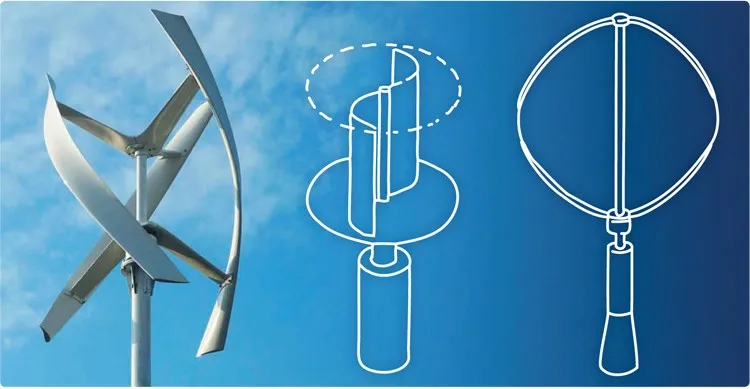
Darrieus Turbines — These turbines, named after their French inventor Georges Darrieus, feature curved blades that resemble an eggbeater. The blades are typically made of aluminum or composite materials and are connected to the central rotor. Darrieus turbines rely primarily on lift, similar to an airplane wing, to generate power. As wind flows over the curved blades, it creates a pressure difference, causing the blades to rotate.
-
Savonius Turbines — Invented by Finnish engineer Sigurd Savonius, these turbines feature two or more scooped blades arranged around a central axis. Savonius turbines operate on the principle of drag. The wind pushes against the concave side of the blades, causing the rotor to turn. While simpler in design than Darrieus turbines, Savonius turbines generally have lower efficiency.
Operation in Detail — Capturing the Wind’s Energy
The operational principles of VAWTs depend largely on their design. Let’s consider each type individually.
Darrieus turbines, relying on lift, demand careful blade design. The angle of attack, or the angle between the blade and the incoming wind, is crucial for efficient operation. If the angle of attack is too high, the blade will stall, resulting in reduced lift and increased drag. To avoid stall, Darrieus turbines typically operate at high rotational speeds.
Savonius turbines, on the other hand, operate based on a simpler principle. The wind exerts force on the concave side of a blade, pushing it around the axis. The curved shape of the blade directs the wind flow, creating a pressure difference that sustains rotation. While easy to manufacture and able to start under load, Savonius turbines are less efficient because drag is inherently a less efficient force than lift.
So, that begs the question, how do vertical wind turbines work to actually generate electricity? In both Darrieus and Savonius designs, the rotating rotor is connected to a generator. As the rotor spins, it drives the generator, which converts mechanical energy into electrical energy. This electricity can then be used to power homes, businesses, or fed into the electrical grid.
Advantages and Disadvantages — Weighing the Options
VAWTs offer several advantages over their horizontal counterparts. Their omnidirectional nature allows them to capture wind from any direction, making them suitable for turbulent or gusty environments. The ground-level placement of the generator and gearbox simplifies maintenance and reduces structural strain. VAWTs are also visually less intrusive, which can be a benefit in urban or residential settings.
However, VAWTs also have their drawbacks. Darrieus turbines are not self-starting, meaning they require an external power source to initiate rotation. They can also suffer from vibration and fatigue due to the cyclical stress on the blades. Savonius turbines, while self-starting, have lower efficiency and are generally less suitable for large-scale power generation.
Applications and Future Trends — Where Will VAWTs Take Us?
Despite their limitations, VAWTs find applications in various niche markets. Small-scale VAWTs are used for off-grid power generation, such as powering remote homes or telecommunication towers. They are also used in urban environments where space is limited and wind conditions are variable.
Looking ahead, advancements in materials science and aerodynamic design could unlock the full potential of VAWTs. Novel blade designs, improved control systems, and innovative generator technologies are being developed to boost efficiency and reduce costs. As the demand for renewable energy grows, VAWTs may play an increasingly important role in our energy future, complementing HAWTs and providing a versatile solution for harnessing wind power in diverse environments. After all, understanding how do vertical wind turbines work is the first step towards realizing their potential.