The relentless pursuit of sustainable energy sources has led humanity down many paths. Solar, hydro, geothermal all stake their claim. Yet, the wind, an ever-present force, whispers promises of clean, renewable power. Within the realm of wind energy, a distinct contender has been steadily gaining traction — vertical axis wind turbines. But what exactly are VAWT wind turbines, and why are they attracting so much attention as a crucial part of our renewable energy future?
Understanding Vertical Axis Wind Turbines
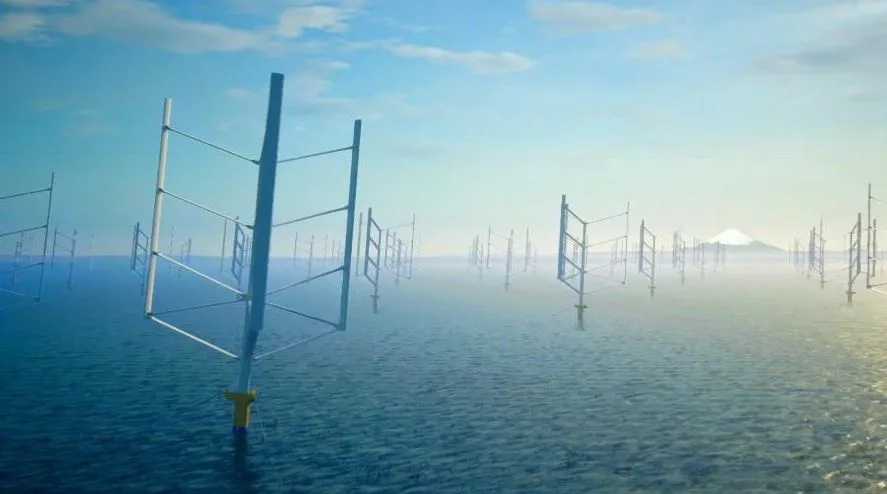
Unlike their more familiar horizontal axis brethren (HAWTs), which resemble airplane propellers perched atop towering masts, VAWT wind turbines possess a radically different design. Imagine a towering eggbeater, spinning gracefully in the breeze. That, in essence, is a vertical axis wind turbine. Their defining characteristic is the orientation of their rotor shaft. Instead of being horizontal, as in HAWTs, it’s vertical. This seemingly simple difference unlocks a cascade of advantages.
One of the most apparent benefits is their omnidirectional nature. HAWTs must constantly adjust to face the wind, a task handled by complex yaw mechanisms. Vertical axis machines, however, accept wind from any direction. This eliminates the need for constant adjustments, simplifying design and reducing maintenance. Think of it this way, they are less fussy.
How do VAWTs work? The wind pushes against the blades, causing the rotor to spin. This rotational energy is then converted into electricity via a generator. The key to efficiency lies in the blade design. There are two primary types — Darrieus and Savonius. Darrieus turbines employ curved blades, resembling giant eggbeaters, and are known for their high efficiency at higher wind speeds. Savonius turbines, on the other hand, use bucket-shaped blades and excel at capturing energy from lower wind speeds. Often, the designs are combined for an optimised effect.
Advantages of VAWT Technology
The advantages of vertical axis wind turbines are numerous. Let’s delve into some of the most compelling reasons why they hold so much promise —
- Lower Wind Speed Operation — These turbines can start generating electricity at lower wind speeds compared to HAWTs. This expands the range of locations where wind energy is viable.
- Reduced Noise Pollution — VAWTs tend to be quieter than HAWTs, making them more suitable for urban and suburban environments. Who wants a noisy neighbour?
- Scalability — VAWTs can be scaled down for small-scale applications, such as powering individual homes or businesses. Imagine energy independence at your fingertips.
- Ease of Maintenance — With the generator and gearbox located at ground level, maintenance is significantly easier and less costly compared to HAWTs, where technicians must ascend tall towers.
- Reduced Bird and Bat Fatalities — Some studies suggest that VAWTs pose a lower risk to birds and bats compared to HAWTs, although further research is ongoing.
- Aesthetic Appeal — While subjective, many find the appearance of VAWTs to be more aesthetically pleasing than HAWTs. Their sleek, modern design can blend seamlessly into urban landscapes.
Challenges and Future Directions
Despite their numerous advantages, vertical axis wind turbines also face challenges. One major hurdle is their efficiency. While Darrieus turbines can achieve high efficiency at optimal wind speeds, they often struggle to match the overall efficiency of HAWTs. Savonius turbines, while excellent at capturing energy from low winds, generally have lower efficiency.
Another challenge is their structural integrity. VAWT blades are subjected to complex stresses and strains, particularly at higher wind speeds. This can lead to fatigue and failure if the design and materials are not carefully chosen.
So, what does the future hold for vertical axis wind turbines? Innovation is key. Researchers are actively working on new blade designs, advanced materials, and improved control systems to enhance efficiency, reduce costs, and increase reliability. One promising area of research is the development of hybrid VAWT designs that combine the strengths of both Darrieus and Savonius turbines.
Moreover, the integration of VAWTs into urban environments is gaining momentum. Their ability to operate in turbulent wind conditions and their lower noise levels make them ideal for installation on rooftops or in densely populated areas. Imagine a city powered by a network of discreet, efficient VAWTs.
In conclusion, while challenges remain, the potential of vertical axis wind turbines to contribute to a sustainable energy future is undeniable. Their unique advantages, coupled with ongoing research and development, position them as a promising technology for harnessing the power of the wind. As we strive to transition to a cleaner, more sustainable energy system, VAWTs are poised to play an increasingly important role. Are they the perfect solution? Perhaps not. But they are undoubtedly a vital piece of the puzzle, a testament to human ingenuity and our unwavering commitment to a greener tomorrow.