How can we revolutionize renewable energy sources, especially in settings where traditional windmills just won’t cut it? Let’s talk about wind turbine vertical designs. They are not just visually striking; they also present some practical advantages for capturing wind power.
Understanding Wind Turbine Vertical Designs
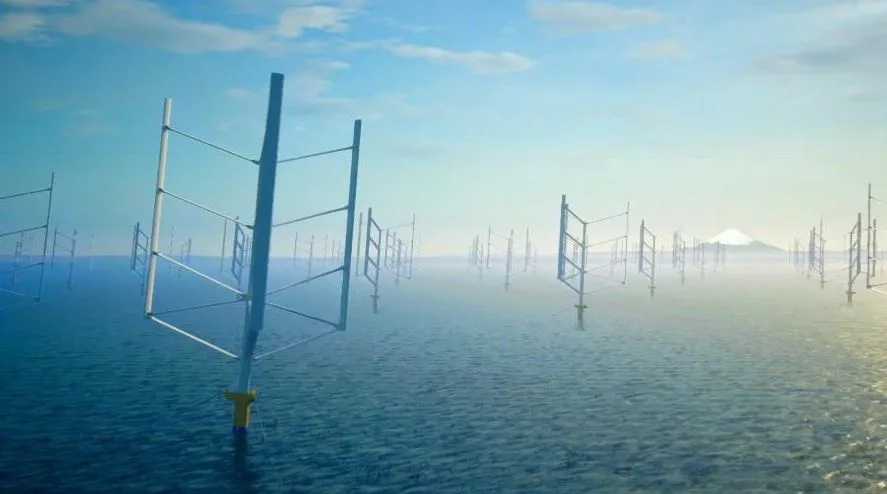
Traditional horizontal-axis wind turbines (HAWTs) are what most people picture when they think of wind farms. However, vertical-axis wind turbines (VAWTs) represent a compelling alternative. Unlike HAWTs, which need to point into the wind, VAWTs can accept wind from any direction. This feature makes them particularly useful in urban environments or complex terrains where wind direction is unpredictable.
VAWTs come in several designs, with the Darrieus and Savonius models being the most common. Darrieus turbines resemble a giant eggbeater, using curved blades to capture wind energy. Savonius turbines, on the other hand, use scoops that catch the wind and rotate the turbine. Each design has its strengths and weaknesses, depending on the application.
Benefits of Vertical Axis Wind Turbines
What exactly makes vertical axis wind turbines so appealing? Several advantages stand out.
First, their omnidirectional nature means they don’t require complex yaw mechanisms to track the wind. This simplifies their design and reduces maintenance. Imagine the reduced upkeep cost!
Second, VAWTs can be located closer to the ground, simplifying installation and maintenance. This also means they can be integrated more easily into urban landscapes. Think about rooftop installations or even integration into building designs.
Third, VAWTs tend to be quieter than HAWTs, which is a significant advantage in residential areas. Noise pollution is a real concern, and VAWTs offer a quieter alternative for local energy generation.
Finally, some studies suggest that VAWTs pose less of a threat to birds and other wildlife. While the debate continues, the potential for reduced environmental impact is a significant consideration.
Overcoming the Challenges
While vertical axis wind turbines offer many benefits, they also face some challenges. One of the main hurdles is their lower efficiency compared to HAWTs. The design of VAWTs means they often capture less energy from the wind.
Another challenge is structural integrity. The blades of VAWTs can experience significant stress, particularly in turbulent wind conditions. This requires robust designs and high-quality materials, which can increase costs.
Furthermore, starting torque can be an issue for some VAWT designs. Some VAWTs require an external power source to start spinning, which reduces their overall efficiency.
Innovative Solutions in Vertical Wind Turbines
Despite these challenges, researchers and engineers are constantly developing innovative solutions to improve the performance and reliability of VAWTs.
One promising area is advanced blade design. By optimizing the shape and aerodynamics of the blades, engineers can significantly increase the energy capture efficiency of VAWTs. Think about biomimicry, where designs are inspired by nature to create more efficient and resilient structures.
Another innovation involves the use of lightweight materials. Carbon fiber and other advanced composites can reduce the weight of the turbine, which in turn reduces stress on the structure and improves performance.
Furthermore, innovative control systems can optimize the operation of VAWTs in real-time. These systems use sensors and algorithms to adjust the pitch and speed of the blades, maximizing energy capture and minimizing stress on the turbine.
Applications of Vertical Wind Turbines
Where can we expect to see vertical wind turbines being used? Their unique characteristics make them suitable for a variety of applications.
Urban environments are a prime target. VAWTs can be installed on rooftops, along highways, or even integrated into building facades. This allows for distributed energy generation, reducing the need for long-distance transmission lines.
Remote locations are another promising area. VAWTs can provide a reliable source of power for off-grid communities, farms, or industrial sites. Their ability to operate in turbulent wind conditions makes them particularly suitable for these environments.
Hybrid systems are also gaining traction. By combining VAWTs with solar panels or other renewable energy sources, it is possible to create a more resilient and reliable energy supply.
The Future of Vertical Wind Turbine Technology
What does the future hold for vertical wind turbines? As technology advances and costs continue to decrease, VAWTs are poised to play an increasingly important role in the global energy mix.
Continued research and development will lead to more efficient and reliable designs. Innovations in blade materials, control systems, and generator technology will further improve the performance of VAWTs.
Policy support is also crucial. Governments can incentivize the adoption of VAWTs through tax credits, subsidies, and other measures. This will help to create a market for VAWTs and accelerate their deployment.
Public awareness is also key. By educating the public about the benefits of VAWTs, we can foster greater acceptance and support for this promising technology.
In conclusion, wind turbine vertical designs represent a compelling solution for harnessing wind energy, particularly in urban environments and remote locations. While challenges remain, ongoing innovation and policy support are paving the way for a brighter, more sustainable future powered by the wind.